Learn how commercial solar can help warehouses manage energy, use rooftop space, and plan for growth in the Roaring Fork Valley.

Quick overview: Warehouses rely on steady electricity for lighting, equipment, security, and storage. Solar can help businesses manage energy use, put large rooftops to work, and plan for future needs. This article covers practical considerations for warehouses in Garfield and Pitkin counties.
From Carbondale to Aspen, warehouses and other commercial buildings help keep the Roaring Fork Valley moving. Their energy needs can be substantial, from lighting and cooling to security systems and equipment.
Businesses across Garfield County and Pitkin County are exploring commercial solar solutions. Lower electricity costs are one reason to consider solar, but a well-planned system can also support energy management, make productive use of roof space, and prepare a facility for changing needs.
Make Better Use of Large Warehouse Roofs
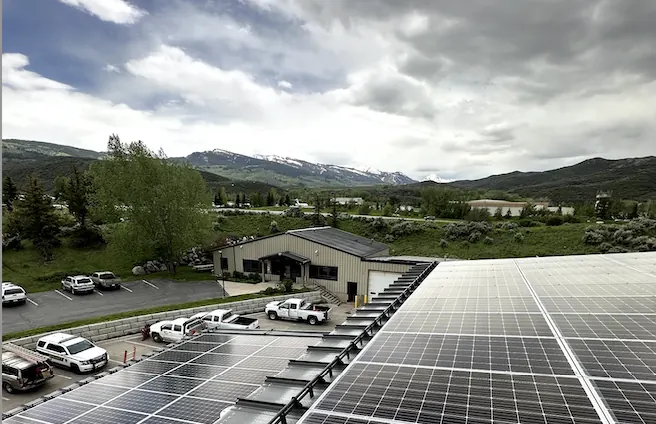
Many warehouses have large rooftops that may receive direct sunlight for much of the day. With a suitable roof and system design, this space can be used to generate electricity.
A solar system allows warehouse owners to use the building they already have in a smarter way. The roof becomes more than protection from the weather; it can also contribute to the property’s energy supply.
Create More Stable Energy Costs
Electricity prices can change over time. When energy costs increase, warehouse owners may need to adjust budgets and rethink expenses.
Solar can help businesses take more control of their energy use. By producing some of their own electricity, warehouses can reduce their dependence on energy from the grid. Actual savings and payback depend on your utility, rates, usage, and system cost; we show the numbers for your address in a proposal.
Support Growing Warehouse Operations
Many facilities now use advanced systems to improve speed and efficiency. From automated equipment to electric forklifts and climate-controlled storage, modern warehouses need reliable power every day.
Solar can provide an additional energy source that works alongside a facility’s existing electrical system. As businesses expand, having an energy plan that accounts for future needs can help them make informed decisions.
Improve the Appeal of Commercial Properties
Energy-efficient buildings can be attractive to commercial buyers and tenants looking to manage ongoing expenses.
A warehouse with a solar system may offer an added advantage by showing that the property is designed with energy efficiency in mind. For owners who plan to lease or sell their property, solar can be one part of the building’s overall appeal.
Use Colorado’s Natural Advantage
Garfield and Pitkin counties receive sunshine throughout the year, creating opportunities for businesses interested in solar energy.
Solar panels can generate electricity in cooler seasons as well as warmer ones. Production varies with system design, placement, weather, and energy needs. In mountain areas, a site assessment should account for conditions such as snow, roof orientation, and shorter winter days.
Prepare Your Warehouse for Future Needs
Business needs change over time. A warehouse that works well today may require more energy as operations grow. Adding equipment, increasing storage, or extending operating hours can all increase electricity use.
Planning a solar installation in Pitkin County early can help businesses consider those changes. A system designed around expected energy use can support growth and help owners plan for future electrical needs.
Support Better Energy Planning
Many warehouse owners focus on daily operations, but long-term planning is just as important. Solar gives businesses another way to think about energy management and how their property can perform over time.
Energy monitoring can help a business compare system production with facility use and spot patterns. Solar can also be paired with battery storage to make some generated energy available later, depending on the system design and utility rules. Each warehouse has different needs, so these options should be evaluated as part of the project plan.
Works for Different Types of Warehouses
Solar can benefit many types of commercial properties, including:
Each warehouse has different energy needs. An evaluation helps determine an appropriate approach based on the building, roof space, and electricity use.
Why Proper Planning Matters
Every warehouse has unique needs. Roof condition, building design, location, and energy use all play a role in system planning. A property review helps identify suitable system design, panel placement, and electrical requirements. In mountain conditions, the roof and proposed equipment should also be assessed for local weather and snow loads.
With careful planning, solar can support daily operations, improve energy management, and help warehouse owners prepare for future energy demands.
Helping Colorado Businesses Move Toward Solar
Your warehouse roof could do more than protect your building; it could help power your business. Solar may support more predictable energy planning, make productive use of rooftop space, and help prepare a facility for future needs. SōL Energy works with businesses on solar solutions shaped around their properties and goals.
Questions about your warehouse roof or energy use? Call SōL Energy at (970) 963-1060, email info@sol-energy.us, or request a free quote.
FAQs
1. How can solar benefit warehouse owners beyond reducing electricity bills?
Solar can help warehouses plan energy use, support daily operations, make use of rooftop space, and contribute to a property’s appeal.
2. Are warehouses a good fit for commercial solar systems?
Many warehouses have large roofs and substantial energy needs, which can make them candidates for commercial solar. Roof condition, structure, sunlight exposure, and electricity use all need to be evaluated.
3. How does solar help warehouse businesses manage energy costs?
Solar lets a business generate some of its own electricity. Savings and payback depend on the utility, rates, energy use, and system cost; a project proposal can show the estimates for a specific address.
4. What makes a warehouse roof suitable for solar installation?
Roof size, sunlight exposure, structural condition, and energy use are key considerations. A site review can also assess local weather and roof requirements.
5. How do warehouses use solar energy?
Warehouses can use solar-generated electricity for lighting, equipment, climate control, refrigeration, security systems, and other operations.
6. Can a warehouse solar system be installed in phases?
Phasing may be possible, depending on the facility’s electrical setup, roof, energy use, and utility requirements. These details are best reviewed before design.
7. What maintenance does a warehouse solar system need?
Maintenance needs depend on the system and site. Monitoring and periodic system checks can help identify issues; ask your installer what maintenance is appropriate for your equipment and location.