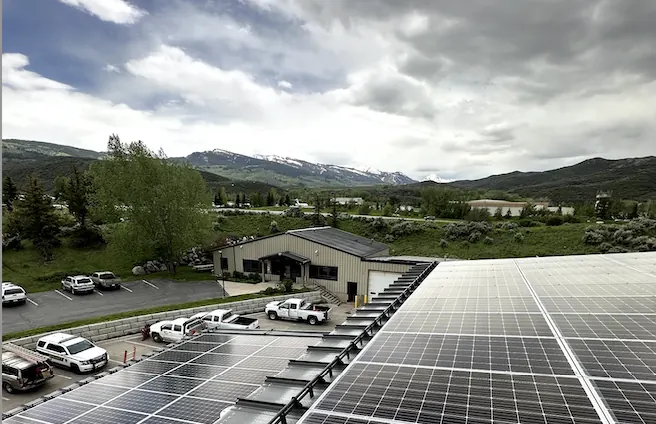
Compare solar and conventional power for businesses in the Roaring Fork Valley, including costs, reliability, and environmental impact.

For businesses in Carbondale and Glenwood Springs, electricity costs and reliability matter year-round. Solar can help make energy costs more predictable, but the right choice depends on your building, utility, and energy use. Working with local solar professionals can help you compare the options.
Businesses are also weighing environmental impact. A well-designed solar system can reduce grid electricity use and your carbon footprint. It can also show customers that your business values clean energy. Here’s how solar compares with conventional power.
Cost: Predictable vs. Unpredictable
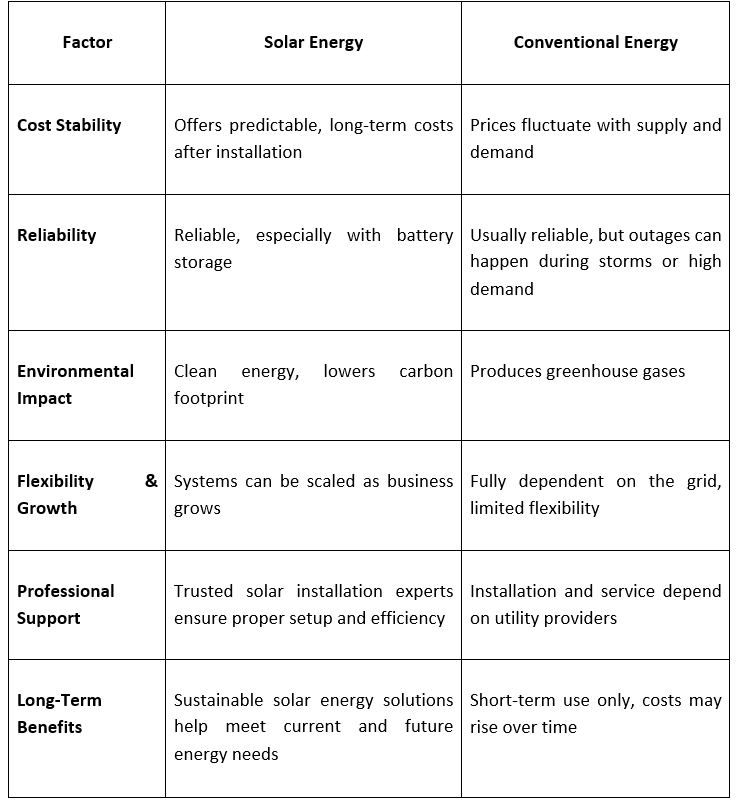
Conventional electricity prices can change with supply, demand, and market conditions, making budgeting difficult. Solar works differently: once installed, panels generate electricity without fuel costs.
The initial setup can be a significant expense, while maintenance needs are generally low. Actual savings and payback depend on your utility, rate, usage, and system cost. We show the numbers for your address in your proposal. Compared with conventional electricity, solar can offer more predictable costs over time.
Reliability and Energy Security
Power outages can be a problem for businesses. The conventional grid is generally reliable, but storms and periods of high demand can cause outages. Solar paired with battery backup can provide added resilience. Energy generated during the day can be stored for use at night or during an outage.
Working with local solar professionals helps ensure your system is designed for your property. Professionals consider panel placement, angle, and monitoring. A battery can help your business keep essential operations running when the grid is down.
Environmental Benefits
Conventional electricity can produce greenhouse gas emissions. Solar generates electricity without on-site air pollution. Installing a solar system in Pitkin County or nearby areas can reduce your business’s carbon footprint and support your environmental goals.
Customers notice when a business takes sustainability seriously. Using solar can support your brand image and build trust with clients. Beyond potential cost savings, it demonstrates responsibility and forward thinking. Choosing solar can benefit both the environment and your business reputation.
Scalability and Flexibility
Solar systems can be designed around a business’s current energy needs, with the possibility of expanding as those needs change. Conventional electricity continues to supply power through the grid, while a solar system gives businesses another source of electricity. Systems designed by local solar professionals can be tailored to your usage.
Design can also account for changes in your business and energy demand. The right system may help you manage energy costs and plan for future growth. Each utility sets its own sizing and interconnection rules, which should be confirmed before design.
Making the Right Choice
Deciding between solar and conventional energy depends on what matters most for your business. Consider cost, reliability, and environmental impact. Here’s a simple comparison:
Step Into a Sustainable Energy Future
Solar is a practical option for some businesses. It can help manage electricity costs and support sustainability goals. Snow, altitude, and shorter winter days are important considerations in the Roaring Fork Valley, so system design should reflect local conditions and your utility’s rules.
For businesses in the valley, SōL Energy can help assess your site and energy use. Our solar designs are tailored to the property and the project’s goals.
Questions about your roof or your bill? Call us at (970) 963-1060 or request a free quote.
Popular Questions & Answers
Q: How can solar energy reduce my business electricity bills?
A: Solar panels generate electricity from sunlight, which can reduce how much electricity your business buys from the grid. The effect on your bills depends on your utility, rate, usage, and system cost.
Q: Can my solar system store energy for power outages?
A: Solar systems paired with batteries can store excess energy for use at night or during outages. The amount of backup available depends on the system and your energy use.
Q: Is solar energy worth the investment for small businesses?
A: It depends on your site, energy use, utility rates, and system cost. A proposal can show the estimated costs and savings for your business.
Q: How do I choose between solar and conventional energy for my business?
A: Consider cost stability, energy reliability, environmental impact, and future plans. A solar assessment can help determine whether a system suits your needs.
Q: How much space do I need for a solar system in Colorado?
A: System size depends on your business’s energy needs and the available roof or land. A site assessment can help determine what fits your property.