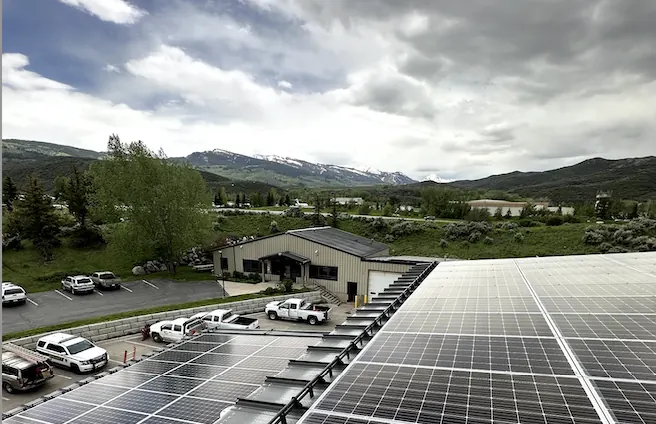
Learn how SōL Energy considers electricity use, site solar potential, future plans, and utility rules when sizing a solar system.

Sizing a solar system starts with your electricity use, your plans for the property, and the sunlight available at your site. For homeowners in the Roaring Fork Valley, from Carbondale to nearby communities, SōL Energy reviews those details and checks local utility requirements before making a proposal.
There are three basic steps in the process:
Your historic annual power consumption is your baseline, or 100%. If someone has occupied the building for 12 months or more, we can assess a recent bill or contact the power company to determine the total kWh consumption for those 12 months. That is almost always step one. If the local power company needs to be contacted, we can make that call with you.
If there is not a 12-month history of consumption, such as when a home has not been occupied for a year or is new construction, a load letter may be required. An electrician usually prepares a load letter by assessing the items in the building that will consume electricity and estimating their annual kWh use.
Once we have determined your baseline, the next question is: do you anticipate your electricity use increasing or decreasing?
These plans are important considerations, but a utility may only consider changes that have already been made or are provably under contract when evaluating an application.
When sizing a system for your property, SōL Energy considers anticipated system degradation over time and the sunlight available at your location.
We use software to account for system efficiency and local sunlight. We can explain the methods behind our solar production figures and those used by the utility company. You can also review the calculations independently.
Utility policies affect system size and how electricity sent to the grid is credited. Holy Cross Energy allows solar generation sized to supply no more than 200% of the account’s previous 12 months of electricity use. For new construction, Holy Cross estimates the use. See Holy Cross Energy’s solar program details.
Glenwood Springs Electric limits net-metered residential solar systems to 10 kW of installed capacity; confirm the limit with the city before design. Each utility sets its own sizing, net-metering, and interconnection rules, so we confirm the requirements for your address before design.
Once these factors are considered, we will offer a proposal for a solar system that fits your needs and location-specific requirements. We typically propose a system that provides between 110% and 120% of your current annual power consumption, subject to utility rules. Our proposal will also explain available financing options. Incentives change. We review what applies to your project and show it in your proposal. Our goal is to give you enough information to decide whether a solar investment fits your circumstances.
Every property is different. SōL Energy can review your electricity use, site conditions, and utility requirements for a home or business in the Roaring Fork Valley. Questions about your roof or your bill? Call us at (970) 963-1060 or request a free quote.