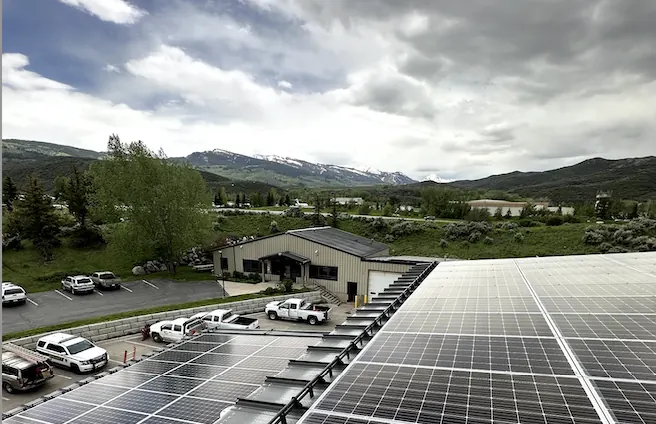
What builders and architects in the Roaring Fork Valley can plan for now to make new homes easier to equip with solar later.

Across the Roaring Fork Valley—from Aspen and Basalt to Carbondale—new homes and buildings can be designed to accommodate solar from the start. Planning for solar during construction can make a future installation simpler for builders, architects, and homeowners.
A solar-ready design includes infrastructure that makes it easier to add solar panels later. This can mean planning roof orientation to capture sunlight, typically with south- or west-facing roof areas, and ensuring the structure can support the added weight. Electrical pre-wiring and conduit placement can simplify installation, while setting aside space for an inverter and battery storage can help make a future transition more practical.
Integrating solar-ready features from the outset can save time and reduce installation costs by avoiding some expensive retrofits. Installing conduit and pre-wiring, and confirming structural capacity during construction, is generally more straightforward than modifying an existing home. Local building requirements and utility rules vary, so checking them early can help projects stay on track. Solar-ready features can also make a home more appealing to buyers looking for energy-efficient options and lower utility costs.
Beyond financial considerations, solar-ready homes can offer practical advantages for mountain living. Power outages can happen during severe weather, and homes designed for solar and battery backup can be better prepared to keep essential loads running. The Roaring Fork Valley is also working to reduce reliance on fossil fuels and expand renewable energy. Solar-ready construction makes future adoption more accessible. Mountain environments bring specific design considerations, including snow, elevation, and shorter winter days. Roof pitch and panel placement can help manage snow, while battery systems should be selected and located with cold temperatures in mind.
To plan effectively, builders should consider roof slope, materials, orientation, and shading. Electrical plans can include conduit and any needed panel capacity for a future solar installation. Utility requirements and available incentives can change, so confirm them before design and construction. Incentives change. We review what applies to your project and show it in your proposal.
Solar-ready design is a practical way to keep future options open for homes and businesses in the Roaring Fork Valley. Questions about your roof or your bill? Call us at (970) 963-1060 or request a free quote.